
Petroleum pipelines are the critical infrastructure of modern energy transportation, responsible for carrying millions of barrels of crude oil and natural gas every day. Within these extensive pipeline networks, valves serve as the “traffic controllers,” managing the direction, volume, and pressure of media flow. Among all valve functions, sealing performance is the cornerstone of safe, reliable, and efficient pipeline operation. Seal failure can lead not only to resource loss but also to catastrophic incidents such as fires, explosions, and environmental contamination. This article provides a detailed overview of sealing materials, valve sealing technologies like packing seals, common failure modes, and strategies to prevent failures in petroleum pipelines.
Petroleum pipelines traverse diverse and often challenging environments, from deserts and oceans to permafrost regions. The media they transport, crude oil, refined fuels, and natural gas, often exhibit high temperatures, high pressures, and strong corrosivity. Valves, as control nodes within these pipelines, must reliably block flow when closed and allow smooth passage when open. The effectiveness of a valve’s sealing system determines its ability to perform these essential functions.
From an economic perspective, even minor leaks accumulate into substantial losses. A single mainline valve with persistent leakage can result in crude oil losses valued at tens of thousands of dollars annually. In addition to direct losses, unsealed valves can cause downtime and increase operational costs due to maintenance and inspection requirements.
From a safety standpoint, petroleum media are highly flammable and potentially explosive. Leaks that form combustible gas clouds can trigger catastrophic explosions when exposed to sparks, open flames, or high-temperature surfaces. Environmental hazards are equally significant. Oil spills contaminate soil and water, and remediation can be extremely costly. Long-term ecological damage may persist for decades, affecting ecosystems and local communities.
Due to these concerns, the petroleum industry imposes stringent sealing requirements on valves. International standards, including API 6D and ISO 5208, specify testing methods, allowable leakage rates, and performance requirements. Compliance requires careful material selection, optimized seal design, and rigorous lifecycle maintenance.
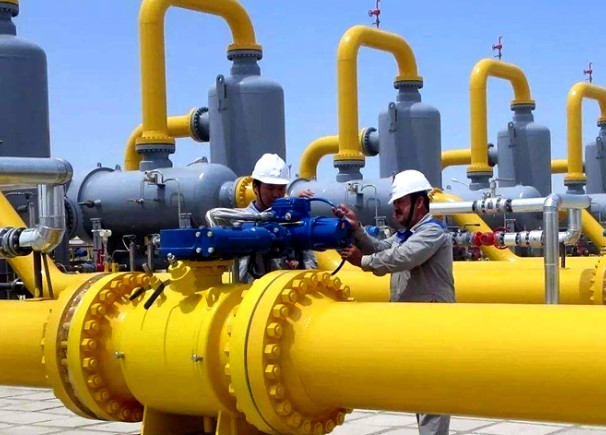
Valve sealing materials are generally classified into soft seals and hard seals, each with distinct advantages and limitations, suitable for different operating conditions.
Soft seal materials include rubber, polytetrafluoroethylene (PTFE, commonly called “Teflon”), and nitrile rubber (NBR). These materials are valued for their elasticity and flexibility, enabling them to conform to microscopic irregularities on sealing surfaces under relatively low pressures.
- Rubber: Cost-effective and easy to process, widely used in ambient-temperature pipelines carrying water or oil.
- PTFE: Exhibits exceptional chemical resistance, nearly inert to all industrial chemicals, and has a low friction coefficient. PTFE is ideal for valves requiring frequent operation and minimal wear.
- Nitrile rubber: Highly oil-resistant, commonly applied in fuel pipelines.
- Limitations: Soft seals generally cannot withstand temperatures above 200°C. High temperatures accelerate aging and hardening, causing loss of elasticity and sealing efficiency. Rubber is susceptible to swelling or cracking in sulfurous or acidic environments. Consequently, soft seals are typically applied in mild conditions, such as refinery pipelines at ambient temperatures or low-pressure urban gas networks.
Hard seals include metals and ceramics, such as stainless steel, cobalt-based alloys (e.g., Stellite), and tungsten carbide ceramics. These materials achieve high hardness and smoothness through precision machining, enabling sealing through metal-to-metal contact.
- Stainless steel: Corrosion-resistant and cost-effective, suitable for moderate operating conditions.
- Cobalt-based alloys: Excellent high-temperature and wear resistance, maintain hardness above 600°C, often used in high-temperature steam or hot oil pipelines.
- Ceramics: Extremely hard, erosion-resistant, ideal for media containing solid particles.
- Advantages: Hard seals are highly durable, often outlasting soft seals by several times.
- Disadvantages: Require extremely precise machining (surface flatness and roughness must reach micrometer levels), specialized assembly skills, and higher material and production costs. Hard seals are commonly used in extreme conditions such as high-pressure, high-temperature, or highly corrosive pipelines, including deepwater oil extraction and long-distance high-pressure gas pipelines.
Petroleum pipeline valves primarily use three sealing technologies: packing seals, O-ring seals, and metal-to-metal seals, chosen based on valve location, operating pressure, and temperature.
Packing seals prevent leakage along the valve stem, which transmits motion from the actuator to the closure element. Materials include braided graphite, PTFE fibers, or flexible graphite. Packing is installed in a ring around the stem within a packing box. Axial pressure from a gland compresses the packing, generating radial expansion that tightly grips the stem, forming a seal.
Modern packing materials may contain corrosion inhibitors and self-lubricating compounds, reducing friction while preventing electrochemical corrosion. High-temperature or high-pressure applications may use pure graphite or metal-reinforced graphite, tolerating temperatures above 500°C. Packing seals are widely used in high-temperature steam, crude oil, and chemical pipelines.
O-rings are circular rubber rings installed in pre-machined grooves. Pre-compression generates sealing pressure, making O-rings simple, cost-effective, and reliable. They are primarily used in valve body-to-cover connections, flange faces, and low-pressure seat seals.
Material selection is critical:
- Nitrile rubber (NBR): Resistant to mineral oils.
- Fluororubber (FKM): Resistant to high temperatures and chemical corrosion.
- Perfluoroelastomers (FFKM): Suitable for extreme chemical environments.
O-rings are unsuitable for high-speed rotation or reciprocating motion due to extrusion and wear risks.
For pressures exceeding 10 MPa, soft seals cannot withstand the load, necessitating metal-to-metal sealing. Two precisely machined metal faces—commonly the valve core and seat—contact directly, blocking flow via high contact stress.
Applications include:
- Ball valves: Metal seat and ball.
- Gate valves: Gate and seat.
- Globe valves: Disc and seat.
To ensure reliable sealing, surfaces are often ground, polished, and hand-lapped, with roughness as low as Ra 0.2 μm. Some high-pressure valves use elastic seats that deform slightly to compensate for thermal expansion or contraction.
Challenges include precise machining and assembly; minor deviations can result in leakage. These precision requirements explain the high cost of metal-seated high-pressure valves.
Valve seal failure occurs as internal leakage or external leakage, with distinct mechanisms and consequences.
Internal leakage happens when the valve is closed, but media flows from the high-pressure inlet to the low-pressure outlet. It is often hidden, making detection difficult.
Consequences include:
Loss of isolation function during maintenance.
Pressure fluctuations affecting downstream processes.
Erosion of sealing surfaces by high-velocity media, creating a “leak-erosion-worse leak” cycle.
Common signs: scratches or pits on ball valves, increased gaps in gate valves, or fatigue cracks on globe valve seats. These are especially prevalent under high-pressure or particle-laden conditions.
External leakage occurs when media escapes into the environment via packing boxes, flanges, or casting defects.
Hazards:
Flammable clouds may cause explosions.
Environmental contamination of soil and groundwater, with costly cleanup.
Causes include aging packing, uneven flange torque, casting defects, and brittle materials at low temperatures. Historical accidents, such as the 2010 Deepwater Horizon explosion, demonstrate the catastrophic potential of external seal failures.
Seal failure rarely occurs randomly; it is typically the result of design, manufacturing, installation, or maintenance issues:
- Design deficiencies: Insufficient safety margins, improper material selection, or inadequate consideration of dynamic loads.
- Manufacturing defects: Surface roughness, flatness errors, porosity, improper heat or surface treatment.
- Improper installation: Incorrect flange torque, contamination on sealing surfaces, cold metal shrinkage, mechanical deformation.
- Chronic corrosion: Sulfur, CO₂, organic acids, and abrasive particles gradually erode seals.
- Thermal and pressure cycling: Repeated expansion/contraction induces fatigue, loss of elasticity, or microcracks.
- Maintenance neglect: Small leaks left uncorrected escalate; poor-quality replacement parts fail prematurely.
Preventive strategies include regular inspection, predictive maintenance, high-quality spare parts, and training for specialized assembly.
Compliance with standards such as API 6D, ISO 5208, and ASME B16.34 ensures valves meet operational requirements. Testing involves:
Hydrostatic or pneumatic pressure tests to detect internal leakage.
Bubble tests or helium leak tests for high-sensitivity detection.
Material verification and hardness testing to confirm durability.
Lifecycle management includes periodic repacking, O-ring replacement, surface refurbishment, and real-time monitoring for high-risk applications.
Valve sealing technology in petroleum pipelines is a multidisciplinary field encompassing materials science, mechanical design, corrosion engineering, and reliability management. From soft seals to hard seals, and from packing to metal-to-metal technologies, each has operational limits and suitability. Understanding failure mechanisms, root causes, and preventive strategies is essential for safe and economical pipeline operation.
With the development of unconventional resources, deepwater oil, polar pipelines, shale gas, sealing technology faces increasingly harsh conditions. Continuous material innovation, precision manufacturing, and design optimization remain critical to meet evolving industry demands. Effective sealing ensures not only operational efficiency and economic benefit but also safeguards people, property, and the environment.
