
Packing seals are one of the most commonly used sealing components in industrial pump and valve equipment. The correct installation method directly affects the sealing performance and service life of the equipment. This article systematically introduces the complete process of packing installation, including preparatory work, size selection, cutting techniques, installation steps, and commissioning methods, helping technicians master standardized operating procedures.
The sealing performance of equipment largely depends on whether the preparatory work before installation is thorough. This stage may seem cumbersome, but it is the foundation to ensure that packing seals can function normally. If the preparatory work is insufficient, even using high-quality packing material will fail to achieve the desired sealing effect and may even cause premature equipment damage.
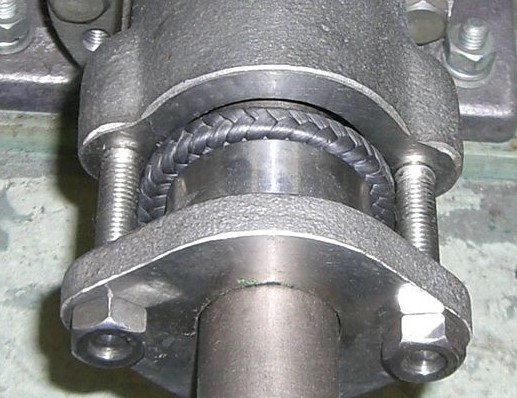
Before performing any maintenance operations, it is necessary to ensure that the equipment for which the packing will be replaced is completely isolated from the system. This is the primary step to ensure operator safety. Relevant valves should be closed, power sources cut off, and clear warning signs placed in the operation area. At the same time, necessary personal protective equipment should be prepared, including safety helmets, protective gloves, and goggles.
Use specialized tools to remove all old packing, avoiding the use of sharp tools that may scratch the interior of the packing box. After cleaning, thoroughly wipe the inside of the packing box with a clean cloth to ensure there is no residue.
Inspect whether any part of the packing box is damaged or misaligned. Key points to observe include:
Whether the valve stem surface has corrosion, dents, or scratches
Whether the wear of the bushing is within allowable limits
Whether the packing box body has cracks or deformation
These defects directly affect the sealing effect of the new packing. Any damaged components found during inspection must be completely replaced. Do not attempt to compensate for equipment defects with new packing, as this will only shorten the packing life and may even cause more serious leakage accidents.
The complete set of installation tools includes: packing pullers, packing ring cutters, torque wrenches, vernier calipers, internal and external calipers, fastener lubricants, inspection mirrors (for checking internal conditions), and paper and pen for recording. All tools should be checked to ensure they are in good condition before use, especially measuring tools, which need to be accurate and reliable.
Selecting the correct packing specification is key to whether the entire sealing system can function normally. Incorrect specifications can result in severe leakage requiring frequent adjustments, or in severe cases, burning out the packing and damaging the bushing in a short time, causing equipment shutdown. This step requires technicians to master the basic selection principles and calculation methods and cannot rely solely on experience or visual estimation.
When selecting packing, two factors must be considered:
Matching the operating conditions with the performance of the packing. Different packing materials are suitable for different media, temperatures, and pressure conditions. For example, PTFE packing has good corrosion resistance and self-lubrication, suitable for chemical media; graphite packing has excellent high-temperature resistance.
Technicians should consult the equipment’s technical parameters and packing product datasheets to select the model that best meets the actual operating conditions. If there are doubts about selection, it is recommended to consult the supplier’s technical representative and not to choose arbitrarily based on experience.
The cross-sectional size of the packing is calculated as:
Packing cross-section = (Packing box diameter − Valve stem diameter) ÷ 2
When measuring, use vernier calipers to measure the packing box bore and the valve stem diameter separately, and record the precise values.
If the equipment has wear, it may be necessary to select a slightly larger cross-section packing to compensate for the gap. However, this compensation is limited; for severely worn equipment, the equipment should be repaired before installing packing.
Cutting Length Calculation: The formula for cutting length is: L = (Shaft diameter d + Packing width s) × 1.07 × π. The factor 1.07 is a shrinkage compensation coefficient, considering the compression deformation of the packing after installation.
Choice of Cutting Method: On rotating shafts, use a 90° square cut. This cut maintains good sealing continuity under rotational conditions. On valves, use a 45° miter cut. The mitered cut better conforms during valve opening and closing, reducing wear.
Sample Ring Method: It is absolutely forbidden to determine the length by directly wrapping the packing around the packing box, as this introduces significant errors. The correct method is: Take a piece of packing and wrap it around a pipe of the same diameter, lightly pressing but without stretching. Cut to create a sample ring. Place the sample ring into the packing box to check that it fully fills the space without gaps. For soft or easily deformed packing materials, a small strip can first be made based on the sample ring, and this strip can then be used as a template to produce the remaining rings in batches. This method improves cutting accuracy and consistency.
Installation of Individual Rings: Install only one packing ring at a time. Before installation, check the surface of the packing to ensure there is no dust, iron filings, or other debris. In dusty environments, a thin layer of cleaning lubricant, compatible with the valve stem, may be applied to aid installation and reduce initial wear. Push the ring slowly axially, ensuring a snug radial fit on the shaft without over-expansion. Use specialized packing tools to compress each ring firmly in place before installing the next.
Staggered Arrangement Principle: Each packing ring must be staggered, with adjacent ring cuts offset by 90°, ideally 120°. This arrangement blocks leakage paths and improves overall sealing.
Installation Depth Control: For valves, the gland should penetrate approximately 25% of the total packing thickness. For pumps, the gland should penetrate approximately 50% of the packing thickness. The difference arises because pump shafts require a certain leakage gap for lubrication and heat dissipation, while valves usually require zero leakage.
Use of Follower Gland: After installation, use the follower gland to compress and hold all packing rings in place, preventing movement during operation. Note that the follower gland is only auxiliary and cannot replace the primary compression mechanism.
Guide Ring Installation (for Reciprocating Pumps) : Guide rings should be installed at both ends and the middle of the pump packing box. They maintain concentric plunger motion, support the plunger weight, and prevent uneven wear.
Initial Tightening Requirements: Use a torque wrench or dedicated measuring device to tighten nuts evenly. Do not attempt to achieve zero leakage during the first tightening, as over-compression can cause frictional overheating or burn the packing.
Pump Commissioning: During pump startup, some leakage must be allowed. If packing is tightened to zero leakage initially, heat generated by friction cannot dissipate, inevitably damaging the packing. Observe leakage during operation. After 15–30 minutes, retighten nuts gradually to adjust the leakage to an allowable range. Recommended leakage is 8–10 drops per minute. For PTFE packing, a higher leakage is acceptable to dissipate heat and reduce thermal expansion effects.
Valve Commissioning: Valves are generally designed for zero leakage. Fully tighten packing according to valve pressure in steps: Apply 30% of full torque or the specified compression percentage. Open and close the valve several times. Apply full torque at the closed position. Check the gland adjustment after several hours and retighten if necessary. When the gland cannot be adjusted further, the packing is fully compressed; if leakage persists, the packing must be replaced.
After starting equipment, first perform a no-load test run. Observe during initial operation:
Loose gland may cause severe leakage
Over-tightened gland may cause packing overheating or smoke
If leakage suddenly stops, immediately retighten the gland to prevent overheating, as this is a dangerous signal. Maintaining a stable, small leakage is safer than complete sealing with overheating.
Early packing failure usually originates from improper installation. If the packing life is noticeably shorter than expected, inspect the old packing and analyze failure causes. Common causes include inaccurate cutting length, insufficient stagger angle, over-initial compression, or misalignment/wear of the equipment. Following standardized installation procedures and performing regular checks and adjustments can significantly extend packing life, reduce maintenance costs, and provide data for future selection and maintenance. It is recommended to establish packing replacement records to track service life under different operating conditions.
The installation and maintenance of packing seals are key to ensuring long-term reliable operation of pumps and valves. From preparatory work, specification selection, and cutting techniques, to step-by-step installation, tightening, and operation monitoring, every step is indispensable. Standardized procedures not only ensure sealing performance but also extend packing life and reduce equipment maintenance costs. By mastering standardized processes, performing regular inspections, and fine-tuning leakage, technicians can effectively prevent early failures and operational anomalies, ensuring safe, stable, and efficient operation of industrial equipment under all operating conditions.
