
Valves are indispensable control elements in industrial production, widely used in industries such as petroleum, chemical, power generation, and pharmaceuticals. The normal operation of valves directly relates to production safety, environmental protection, and economic benefits. Among the many components of a valve, valve packing, though small, plays a crucial role. The primary function of packing is to prevent fluid leakage along the valve stem, but while performing its sealing function, it also generates friction. If this friction is not properly controlled, it can, at minimum, affect valve operation accuracy, and at worst, lead to equipment failure or even safety accidents. This article will explore in depth the specific impact of valve packing friction on performance and introduce practical strategies for reducing friction.
The core role of valve packing is sealing, but in fulfilling this role, friction is inevitably generated. This friction is not a harmless byproduct but a key variable that directly affects valve operation performance. Understanding how friction acts on the various aspects of a valve is the first step in optimizing equipment performance.
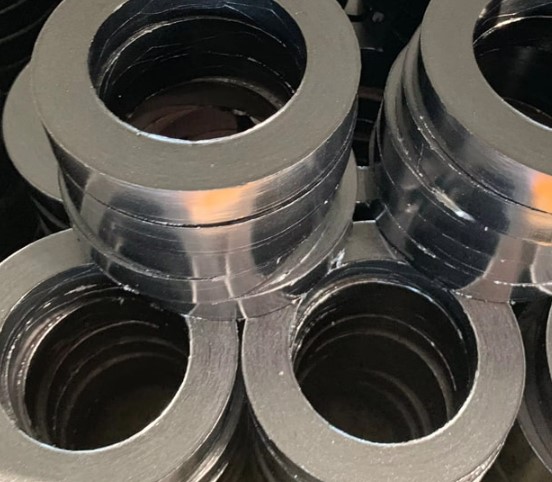
Packing generates friction during stem movement, which can be divided into static friction (at startup) and dynamic friction (during operation). When packing is compressed too tightly or the material is improperly selected, the friction force increases significantly. Operators must apply greater force to turn or move the stem, which not only increases labor intensity but, for electric or pneumatic actuators, also means higher energy consumption. Long-term high-load operation accelerates actuator aging and increases maintenance costs.
Stick-slip is a common problem in control valves. Its mechanism is as follows: when the valve attempts to adjust position, static friction temporarily "sticks" the stem; when the actuator's force accumulates enough to overcome static friction, the stem suddenly "jumps"; due to lower dynamic friction, the stem overshoots to a new position. This process repeats continuously, causing the valve to be unable to position accurately, generating oscillations. When multiple control valves experience this simultaneously, the stability of the entire control system is affected, making flow or pressure control difficult, accelerating equipment wear, and even creating safety risks.
This is the most severe consequence. When packing friction exceeds the maximum output force of the actuator, the valve cannot move at all, entering a "seized" state. Even if the packing itself meets leakage emission standards (FE standards), this extreme situation poses a significant risk for future operation. In emergencies, the valve's inability to open or close promptly may cause serious accidents.
High friction causes temperature increases at the contact area between packing and stem. Although some materials (such as PTFE) experience a reduced friction coefficient at elevated temperatures, excessive heat can damage the packing, accelerate aging, and even trigger thermal decomposition, producing harmful substances.
If packing is compressed too tightly, friction increases, making operation difficult; if it is too loose, leakage increases. This is a technical problem requiring precise balance. Leakage not only results in material loss and environmental pollution but may also violate environmental regulations and face penalties.
Given the significant impact of packing friction on valve performance, which factors determine the magnitude of friction? From material properties to structural design, from installation practices to operating conditions, multiple variables interact to determine the actual friction level during valve operation. Mastering these key factors allows targeted optimization of the packing system.
Different materials have significantly different friction coefficients:
- PTFE (Polytetrafluoroethylene): Has the lowest friction coefficient, with a small difference between static and dynamic friction, making it the first choice for reducing friction. However, PTFE has temperature limitations (usually not exceeding 260°C), can degrade at high temperatures, and exhibits significant creep and flow.
- Flexible Graphite: Exhibits excellent temperature resistance, usable up to 454°C in oxidizing atmospheres and up to 649°C in steam atmospheres. Friction coefficient is within an acceptable range, but static friction may be relatively high in certain conditions. Graphite also has good heat dissipation, an advantage PTFE lacks.
- Composite Materials: PTFE-graphite combinations perform well at moderate temperatures, with static friction around 0.15 and dynamic friction around 0.05. In practical applications, woven graphite or carbon yarn is often used as an end ring (scraper ring), reducing graphite accumulation on the moving surface, lowering friction, preventing packing extrusion, and supporting radial stem movement.
Many devices have more packing rings than necessary. The more rings, the greater the contact area between the stem and packing, increasing friction. Excessive rings increase both static and dynamic friction. Experience shows that 4 to 5 packing rings are usually sufficient for effective sealing. If the packing box has extra space, solid carbon or similar inserts can fill the remaining volume rather than adding more rings.
Most dynamic applications use square-section packing due to availability and ease of installation. Tapered or wedge-shaped packing theoretically provides better radial expansion at lower pressures, reducing friction for high-frequency operation valves, but studies show that after compression, the difference in operational friction is minimal. Considering installation convenience and quick replacement needs, square-section packing remains the mainstream choice.
Adding appropriate lubricants during manufacturing of braided packing can reduce friction. However, over-tightening or thermal decomposition during operation can destroy the lubricant; certain chemicals may react with the lubricant, causing it to dry quickly, making packing brittle and increasing stem wear.
Improper installation is the most common cause of packing failure. Packing is often over-tightened, while manufacturers or maintenance teams provide a "target stress range." Exceeding this range may lead to packing extrusion, reducing sealing performance. Correct installation procedures are critical to ensuring low friction and long-term reliability.
Based on the factors above, a systematic set of friction control methods has been developed in engineering practice. The following strategies have been field-verified and can be flexibly combined according to specific operating conditions.
Reducing packing compression is a direct method to lower friction. However, it must be done while ensuring sealing and with reference to manufacturer-provided stress range data. Simplified formulas proposed by EPRI (Electric Power Research Institute) can be used to calculate friction for reciprocating stems, considering stem diameter, uncompressed packing height, compression stress, friction factor, and axial/radial stress coefficients.
Reducing unnecessary packing rings while maintaining sealing significantly lowers friction. As mentioned, 4–5 rings are typically reasonable. Any spacing issues from reducing ring number can be addressed with carbon or steel sleeves, maintaining packing height without increasing contact area with the stem.
Select appropriate materials according to operating conditions:
- Low temperature, low friction: prioritize PTFE-based packing
- High-temperature environment: graphite or PTFE/graphite composites
- Extreme conditions: carbon-fiber braided material with thin PTFE coating, balancing low friction and structural strength
Reference friction factors (μ):
- PTFE braided packing: ~0.08
- Lubricated graphite: ~0.09
- Molded graphite: ~0.10
Stem roughness is recommended to be controlled at 32 μin (AARH) or better. A smoother surface significantly reduces friction and extends packing life. Ensure the stem has no radial runout, as uneven stress may exceed packing compression and recovery limits, affecting sealing.
Use a torque wrench to tighten packing glands to standard torque
Regularly inspect packing and adjust compression
Train maintenance personnel in proper installation techniques
Record maintenance history to track packing performance changes
Selecting the optimal sealing solution requires consideration of six key parameters:
- S – Size: Provide standard or non-standard size information to the manufacturer to ensure the packing fits the gland.
- T – Temperature: Consider continuous operating temperature and thermal cycles. Frictional heat from rotating equipment raises the contact temperature.
- A – Application: Clarify installation position and motion type (reciprocating, helical, or continuous rotation).
- M – Media: Ensure packing material is chemically compatible with process fluid, without reaction or degradation.
- P – Pressure: Consider internal system pressure and pressure fluctuations.
- S – Speed: High-speed motion requires materials that can withstand speed and dissipate heat. In valves, speed is usually not critical but must be considered.
By combining these data, manufacturers can determine the best product and sealing strategy, achieving low-friction operation while meeting sealing requirements.
Valve packing friction is a complex technical issue involving material science, mechanical design, and maintenance practices. Excessive friction increases energy consumption, reduces control accuracy, accelerates wear, and may cause failure; insufficient compression may result in leakage, posing safety and environmental risks. Through reasonable material selection (optimized PTFE-graphite combination), controlling the number of packing rings (usually 4–5), improving installation practices, and following the STAMPS parameter method, an optimal balance between sealing performance and operational performance can be achieved.
It is important to emphasize that no single packing solution fits all operating conditions. Each application has unique requirements, and the most suitable sealing technology and strategy must be selected according to specific conditions, cost constraints, and historical performance. Establishing standardized testing methods and maintenance procedures is crucial for ensuring long-term reliable valve operation. With increasingly strict environmental regulations and higher industrial automation levels, low-friction, high-sealing packing technology will continue to develop, providing safe, efficient, and environmentally friendly industrial operation.
