
In industrial piping systems, pressure vessels, and various mechanical equipment, gaskets are one of the most inconspicuous yet critical components. Their role is very simple—they seal gaps and prevent fluid leakage. But such a seemingly simple function directly affects the safe operation of the entire system. The consequences of gasket failure are often severe. Leaks not only cause material loss and environmental pollution but may also trigger major safety incidents such as fires and explosions. Statistics show that gasket failure is one of the most common causes of unplanned downtime in industrial systems. Therefore, understanding the principles of gasket sealing, mastering the causes of failure, and implementing preventive maintenance are basic skills for every engineer and maintenance personnel.
The effectiveness of a gasket seal depends on multiple factors working together. The following section analyzes seven key factors affecting sealing performance from three dimensions: material characteristics, operating conditions, and installation and maintenance.
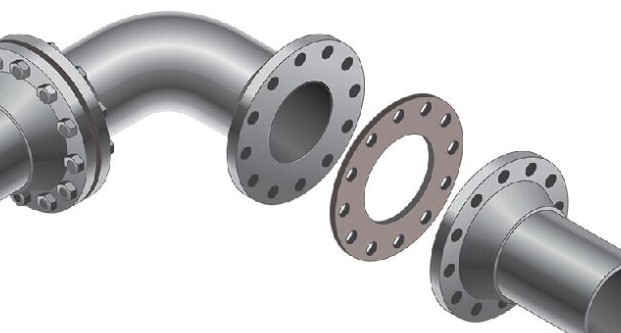
The shape accuracy and surface roughness of the sealing surface directly affect sealing performance. A smooth surface helps form tight contact and reduces leakage paths.
Different types of gaskets have different sensitivity to surface conditions. Soft gaskets such as rubber and asbestos-free fiber can easily deform and adapt to slightly uneven surfaces, making them relatively insensitive to surface conditions. Hard gaskets, such as metal and rigid composite materials, have extremely high surface requirements; even minor scratches or unevenness can cause sealing failure.
The contact width between the gasket and the sealing surface is also a parameter that needs balancing. The larger the contact width, the longer the path for fluid leakage, and the greater the flow resistance, which is favorable for sealing. However, under the same compressive force, the larger the contact area, the smaller the pressure per unit area (sealing stress). Therefore, it is necessary to select an appropriate contact width according to the gasket material to ensure sufficient sealing stress while providing a sufficient sealing path length.
The type and physical properties of the fluid significantly affect sealing difficulty.
- Viscosity differences: High-viscosity fluids have poor flowability and are less likely to pass through tiny sealing gaps, making them easier to seal. Liquids generally have much higher viscosity than gases, so liquid systems are easier to achieve reliable sealing.
- Phase change: Saturated steam is easier to seal than superheated steam because saturated steam condenses into droplets during leakage, which block the leakage path and form an additional sealing barrier.
- Molecular volume: The larger the molecular volume of the fluid, the more easily it is blocked by narrow sealing gaps, making sealing easier.
- Wettability: The wettability of the fluid to the gasket material also affects sealing performance. Liquids that wet easily can generate capillary action within micro-pores of the gasket, causing permeation leakage. This is why some systems that appear well-sealed may still exhibit slow leakage.
Temperature changes affect sealing performance in multiple ways.
Rising temperature reduces liquid viscosity, making liquids easier to flow and leak; at the same time, gas viscosity increases, but this does not mean that gases are easier to seal because high temperatures are usually accompanied by pressure changes. More importantly, temperature changes cause thermal expansion and contraction of sealing components, resulting in deformation and gap changes, which can lead to leakage.
For soft gasket materials, high temperature may also cause aging, hardening, or decomposition, leading to a loss of elasticity and sealing ability. Therefore, when selecting gaskets, it is necessary to ensure that their temperature rating is higher than the system’s maximum operating temperature.
Soft materials (such as rubber, asbestos-free fibers, PTFE, etc.) easily undergo elastic or plastic deformation under preload, which can fill the micro-roughness of the sealing surface and block leakage paths, thus providing good sealing performance. However, such materials usually cannot withstand high pressure and are prone to extrusion or collapse under high-pressure conditions.
Hard materials (such as metal and rigid graphite) can withstand high temperature and high pressure but require high-quality sealing surfaces and greater preloading force to achieve effective sealing. Semi-metal gaskets, such as metal-jacketed gaskets and metal-toothed gaskets, combine the sealing performance of soft materials with the strength of metals and are commonly used under high-temperature and high-pressure conditions.
The corrosion resistance, heat resistance, and density of materials are also important performance indicators. Porous materials or hydrophilic materials are more prone to permeation leakage and are not suitable for sealing low-viscosity liquids.
Sealing stress refers to the normal force per unit contact area between sealing surfaces and is a core parameter affecting sealing performance.
The basic principle of sealing is: applying preload through bolts or other fasteners generates sufficient stress on the sealing surface, causing the gasket to deform as needed, reducing or eliminating gaps between the contact surfaces, and thereby preventing fluid passage.
Sealing stress must be controlled within a reasonable range. Too low stress cannot ensure effective sealing; too high stress may exceed the material’s extrusion strength limit, causing gasket collapse, extrusion, or permanent deformation. In dynamic sealing applications, excessive stress will also increase friction resistance and accelerate wear.
It should be noted that internal system pressure offsets part of the bolt preload, reducing the actual sealing stress. Therefore, the design must consider the effect of internal pressure to ensure sufficient residual stress under the most severe operating conditions.
Vibration in piping systems, deformation of connectors, and installation misalignment can all negatively affect sealing.
Vibration is one of the most dangerous factors. It causes periodic changes in compressive force between sealing surfaces, leading to gradual loosening of bolts and eventually causing seal failure. Vibration may originate from external equipment (such as pumps, compressors, nearby operating machinery) or from internal fluid flow within the system (such as turbulence, cavitation, and water hammer).
For pipelines that experience frequent vibration, gaskets with elastic compensation, such as metal-jacketed gaskets, should be preferred, while rigid gaskets should be avoided.
No matter how good a gasket is, improper installation can lead to failure. Factors such as cleanliness during installation, alignment, and bolt tightening methods all affect the final sealing performance.
Daily maintenance is equally important. Regularly check bolt tightness, retighten loose bolts, replace gaskets as a full set to avoid mixing new and old, and inspect gasket condition after long shutdowns, replacing if necessary before restarting.
Engineering practice shows that the vast majority of gasket problems can be categorized into the following three failure modes:
Over-compression and material damage: When bolt load is too high, the gasket is crushed, reducing the effective contact area and allowing fluid to bypass the sealing zone. In soft materials, over-compression may cause material to extrude beyond the sealing edge; in metal or semi-metal gaskets, over-compression may cause gasket deformation, loss of rebound performance, or blowout under internal pressure.
Torque loss and bolt relaxation: This is the most common progressive failure mode. As bolts loosen and gaskets creep, sealing stress gradually decreases. When internal system pressure exceeds residual clamping force, leaks or gasket blowouts occur. This failure is often delayed and may appear weeks or months after installation.
Chemical incompatibility and material aging: When gasket material is incompatible with the medium, chemical corrosion gradually destroys the material structure. This failure usually manifests as surface degradation, volume change, and strength reduction, ultimately leading to sealing failure. Preventive measures focus on correct material selection and, if necessary, consulting material suppliers for compatibility testing.
Correct selection is the first line of defense against failure and should focus on:
- High-temperature steam: select metal-jacketed gaskets, corrugated metal gaskets, or metal-toothed gaskets; avoid rubber or other organic materials to prevent high-temperature aging.
- Corrosive acids/bases: PTFE gaskets, modified PTFE gaskets, or graphite-reinforced gaskets are preferred; ordinary rubber or fiber materials are easily corroded.
- Oils and organic solvents: consider swelling; nitrile rubber, fluorine rubber, and other oil-resistant materials are more suitable.
- Verification of operating parameters: The rated working temperature and pressure of the gasket must be higher than the actual system values, with sufficient margin. Pay attention to peak system temperature and pressure, which may be much higher than normal operating conditions.
- Flat flange: suitable for non-metallic flat gaskets such as rubber sheets or asbestos-free fiber sheets.
- Raised-face flange: can pair with metal-jacketed gaskets; use flange bosses for positioning to prevent extrusion.
- Tongue-and-groove flange: use narrow-face gaskets; use groove walls to prevent high-pressure extrusion.
For vibrating systems, select gaskets with elastic compensation; for frequently disassembled connections, choose easily replaceable gaskets; for the food and pharmaceutical industries, use materials compliant with relevant certification standards.
Installation quality directly determines gasket life and must follow these guidelines:
- Preparation before installation: Clean sealing surfaces, remove rust, scratches, old gasket residues, and impurities to ensure flat and smooth surfaces. Use scrapers, wire brushes, or grinding if necessary. Inspect flanges for warping, dents, cracks, etc.; severely deformed flanges must be repaired or replaced. Prepare calibrated torque wrenches, suitable bolt lubricants, and new gaskets, and confirm bolt specifications and strength grade.
- Gasket assembly: Place the gasket centered between flange surfaces; deviation should generally not exceed 2 mm. Misalignment can cause uneven stress and local overload or insufficient sealing. Avoid contaminating sealing surfaces with hands or other substances.
- Bolt tightening: Apply lubrication to threads, nut bearing surfaces, and washer sides; ensure flange alignment; tighten in cross (star) pattern gradually; tighten in 2–3 steps to the target torque (30%, 60%, 100%) to avoid local over-tightening; use a calibrated torque wrench and follow manufacturer torque values strictly.
Even correctly selected and installed gaskets require regular maintenance to maintain long-term reliable sealing:
- Regular inspection: Visual checks for leaks, gasket extrusion, discoloration, or surface damage.
- Bolt retightening: Compensate for initial relaxation during early operation; establish a periodic retightening schedule for critical connections.
- Torque verification: Check bolt torque at planned intervals, especially after thermal cycles or pressure fluctuations.
- Replacement management: Replace gaskets as a complete set to avoid mixing old and new; inspect elasticity after long shutdowns and replace permanently deformed or aged gaskets.
- Operation control: Minimize frequent and severe pressure fluctuations; set up buffer tanks, pressure stabilizers, or soft-start programs if necessary. Avoid rapid temperature changes to reduce thermal shock on sealing components.
Gasket sealing may appear simple but involves knowledge of material science, fluid mechanics, mechanical design, and installation technology. Ensuring reliable sealing requires systematically considering the following:
Thoroughly understand the seven key factors affecting sealing and fully consider operating conditions during design and selection.
Accurately identify causes and failure modes, so problems can be traced to the root rather than merely treating symptoms.
Strictly follow selection standards to ensure gasket material, structure, and performance parameters match the medium and operating conditions.
Emphasize installation quality, following procedures for cleaning, alignment, lubrication, and stepwise tightening.
Establish a comprehensive maintenance system, with regular inspections, bolt retightening, and condition monitoring to take preventive measures before failure occurs.
Gasket reliability directly affects equipment safety, environmental protection, and economic efficiency. Paying sufficient attention to gasket sealing management is the professional responsibility of every engineer and maintenance personnel, and a critical guarantee for enterprises to achieve safe production and cost-effectiveness.
