
Sealing gaskets are common sealing components in mechanical equipment and industrial piping systems. Their primary function is to prevent fluid or gas from leaking at connection points. For all types of mechanical equipment, sealing gaskets are indispensable basic components, and their installation quality directly affects the sealing performance and operational safety of the equipment. When installed correctly, sealing gaskets can effectively ensure proper sealing and support smooth equipment operation. Conversely, improper installation can damage the gasket itself and may lead to serious leakage incidents, creating safety hazards and economic losses. Therefore, mastering the correct gasket installation methods is of great practical importance.
- Inspection of the Connection Structure: Before installing the gasket, all related components must be thoroughly inspected. First, check whether the flange connection structure or threaded connection structure is intact, confirm that the static sealing surface is undamaged, and ensure that the gasket itself has no defects. Installation should begin only when all valve components are in good condition.
- Cleaning and Lubrication: Prior to installation, the sealing surfaces, gasket, threads, and rotating parts of bolts and nuts must be cleaned. Apply a layer of graphite powder to these areas, or use a lubricant prepared by mixing graphite powder with machine oil (or water). Special attention must be paid to keeping both the gasket and graphite materials clean and free from contamination.
- Flange Surface Cleaning: Before installing the gasket, carefully clean the flange surface with a brush or cloth to ensure that no foreign matter remains. The surface quality of the flange sealing face directly affects sealing performance, particularly surface roughness. If the surface quality does not meet requirements, leakage may occur even if the bolt preload is increased. Different gasket types have different surface quality requirements. For example, spiral wound gaskets require a sealing surface roughness of 3.2 microns, while certain PTFE gaskets require 1.6 microns or better. Therefore, when selecting a gasket, it is essential to confirm that the machining accuracy of the flange face is compatible.
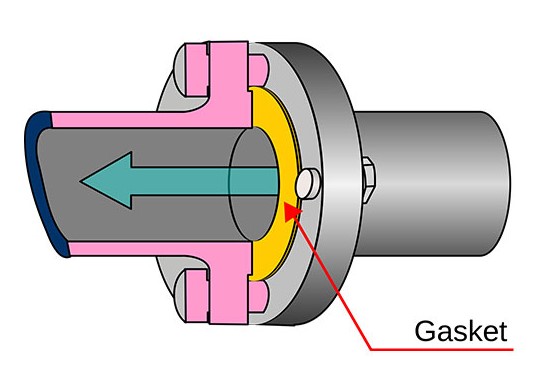
- Alignment Principle: The gasket must be centered correctly on the sealing surface without tilting, extending into the valve cavity, or resting on the shoulder. Proper alignment ensures uniform bolt preload around the flange circumference. Eccentric installation causes uneven compression of the gasket and can easily result in leakage.
- Single-Gasket Requirement: Only one gasket is permitted during installation. Installing two or more gaskets between sealing surfaces to compensate for insufficient spacing is prohibited. Although this may appear to fill the gap, it actually disrupts the flatness of the sealing surface and leads to leakage.
- Installation Requirements for Special Gaskets: For oval gaskets, the inner and outer rings should contact each other during installation, but the two end faces must not touch the groove bottom. When installing O-rings, ensure that both the ring and groove meet design requirements and that the compression is appropriate. On the premise of maintaining a seal, a lower compression deformation rate is preferable, as it extends the service life of the O-ring. When installing spiral wound gaskets used with raised-face flanges, ensure that the sealing element is concentric with the pipeline. Typically, positioning is achieved by allowing the outer reinforcing ring to contact the inner circumference of the bolts; eccentric installation is not allowed. When installing basic spiral wound gaskets in tongue-and-groove flanges, maintain consistent clearance with the groove wall.
- Dimensional Matching Requirements: The outer diameter of the gasket should be slightly smaller than the outer diameter of the flange sealing surface, while the inner diameter should be slightly larger than the pipe’s inner diameter. The difference between the two inner diameters is generally taken as twice the gasket thickness. This ensures that, after compression, the inner edge of the gasket will not protrude into the vessel or pipeline, thereby avoiding obstruction of fluid flow.
After the gasket is positioned, tightening becomes the critical factor determining sealing success. Many leakage problems arise not from gasket defects but from improper bolt preload control or incorrect tightening sequences. This stage requires balancing mechanical principles with practical skills to ensure uniform gasket compression and long-term sealing stability.
Before compressing the gasket, clearly understand the pressure, temperature, medium properties, and gasket material characteristics, then determine the appropriate preload. The preload should be minimized within a reasonable range while ensuring no leakage during pressure testing. After tightening, a preload margin should remain in the connection to allow additional tightening if leakage occurs.
The preload must not exceed design specifications to prevent excessive compression that would cause the gasket to lose its resilience.
A torque wrench is recommended for compressing sealing gaskets. For large bolts and high-strength bolts, hydraulic tensioners are preferable. Tightening torque should be calculated based on the specified gasket compression requirements, and the hydraulic pressure of tensioners should also be determined through calculation.
For bolt or threaded connections, the gasket should remain in a horizontal position. For threaded gasket covers with wrench flats, pipe wrenches must not be used, as they may damage the components.
When installing sealing gaskets, nuts should be tightened sequentially. However, the design value should not be reached in a single pass; typically, at least two to three cycles are required to ensure even stress distribution across the gasket. Bolt preloading should be performed uniformly and symmetrically to prevent uneven tightening.
Control of preload magnitude and uniformity is essential. Currently, two primary methods are used:
Using a torque wrench to set the final preload torque based on gasket size and required compressive stress.
Controlling gasket compression by measuring the gap between flange sealing faces.
The gasket compression ratio is calculated as the compressed thickness divided by the original thickness. For spiral wound gaskets, a compression ratio of no less than 25% is recommended.
For large-diameter sealing gaskets, the influence of internal pressure on gasket stress can cause bolt elongation; therefore, increased bolt preload should be considered.
When installing metal-jacketed gaskets with relatively narrow widths, place a steel plate of appropriate thickness outside the gasket before compressing the flange. This prevents the filler inside the metal gasket from expanding under pressure and forcing open the metal shell joint (or lap), thereby avoiding gasket damage.
High-Temperature Conditions: In high-temperature environments, bolts may experience creep, resulting in stress relaxation and increased deformation that can ultimately cause leakage at the gasket. Thermal tightening is required in such cases. Additionally, sealing performance may become unstable due to packing deterioration and gasket creep, making re-tightening strongly recommended. When the flange operating temperature exceeds 200°C, sealant should be applied between the flange sealing surface and the gasket. This prevents sintering between the gasket and flange at high temperatures, reducing maintenance difficulty during gasket replacement.
Low-Temperature Conditions: Under low-temperature conditions, bolts may shrink. Cold loosening operations are necessary to maintain appropriate sealing pressure.
- Application of Liquid Gaskets: When liquid gaskets are used on sealing surfaces, the surfaces must be cleaned or surface-treated. Flat sealing faces should be lapped to achieve proper matching. Adhesive should be applied evenly while minimizing trapped air, and the adhesive layer thickness should generally be 0.1–0.2 mm.
- Use of PTFE Film Tape: When using PTFE film tape for threaded sealing, firmly stretch the starting point of the film to thin it and adhere it to the thread surface. Then remove any excess tape at the starting point so that the adhered film forms a wedge shape.
- Sealant Formulation and Selection: If the sealing surface is uneven, apply sealant before installing the gasket. Sealant typically consists of manganese dioxide, red lead, graphite powder, and boiled linseed oil (a drying oil). Select the appropriate type and grade of liquid sealant based on the sealing medium, operating temperature, and pressure.
- Lapping of Metal Ring Gaskets: When installing octagonal metal ring gaskets, if machining of the ring or flange groove is less than ideal, lapping can be used to achieve a tight fit. For large-diameter metal ring gaskets, lapping may be difficult; sealant can be used to fill minor surface irregularities.
- Valve Position Requirements: Before placing the gasket and installing the cover, the valve should be in the open position to avoid interfering with installation or damaging valve components. Align the cover carefully; do not push or pull it into contact with the gasket, as this may cause displacement or abrasion.
- Explosion-Proof Safety Requirements: For pressure vessels and pipelines carrying flammable or explosive media, safety tools must be used when replacing sealing gaskets. This prevents sparks caused by tool contact with flanges or bolts, which could lead to fire or explosion.
- Prohibition of Pressurized Operations: If leakage occurs in a pipeline, pressure must be reduced before replacing or adjusting the gasket installation. Pressurized operation is strictly prohibited, as it may cause severe leakage and pose a serious threat to personnel safety.
- Surface Quality Inspection: Both the gasket and flange sealing surfaces must be clean and free from scratches, stains, or other defects that could affect sealing performance. Carefully inspect the flatness and cleanliness of the sealing surfaces before installation.
- Sealing Performance Test: After installation, conduct a pressure test to verify whether sealing performance meets the required standards. Increase the test pressure gradually and observe for leakage. If leakage is detected, analyze the cause and implement corrective measures.
- Spiral Wound Gaskets: These require a flange sealing surface roughness of 3.2 microns. A compression ratio of no less than 25% is recommended, and proper centering must be ensured to avoid eccentricity.
- PTFE Gaskets: Some PTFE gaskets demand higher surface quality, requiring roughness of 1.6 microns or better. Maintain cleanliness during installation to prevent contamination.
- Metal Ring Gaskets: Octagonal metal ring gaskets can achieve improved fit through lapping when machining is suboptimal. Sealant may be used for large-diameter rings to compensate for surface unevenness.
- Metal-Jacketed Gaskets: When installing narrow metal-jacketed gaskets, add a protective steel plate on the outer side to prevent the filler from expanding under compression and forcing open the metal shell.
The correct gasket installation process should include the following steps: first, select the appropriate gasket type based on the process medium, operating conditions, and flange sealing surface form; next, thoroughly clean the flange surface to ensure it meets the required quality standards; then position the gasket properly, ensuring accurate centering without misalignment; finally, control the gasket preload and use suitable tools to tighten bolts evenly. Under high-temperature conditions, remember to perform thermal tightening and re-tightening, and apply sealant when flange temperatures exceed 200°C to prevent sintering. For flammable and explosive media, explosion-proof tools must be used, and pressurized operations are strictly forbidden.
By following the above installation steps and precautions, the sealing performance of gaskets can be effectively ensured, equipment service life can be extended, and the safe and stable operation of industrial production can be maintained.
