
In demanding industrial environments such as oil refineries, chemical plants, power stations, and high-pressure steam systems, the integrity of pipelines, valves, and equipment relies on effective sealing solutions. Among various sealing technologies, spiral wound gaskets have proven to be one of the most reliable solutions. They are designed to provide leak-free performance under extreme conditions, including high temperatures, high pressures, and corrosive chemical media.
As industries continue to advance, there is a growing demand for high-performance gaskets that ensure system reliability, operational safety, and compliance with international standards. Selecting the right spiral wound gasket is more than a routine procurement decision—it is a crucial step to prevent costly downtime, avoid leakage incidents, and extend equipment lifespan.
Engineers, maintenance supervisors, and procurement professionals can save significant time and reduce costs by following a structured gasket selection process. This comprehensive guide covers temperature and pressure requirements, filler and metal materials, flange compatibility, chemical resistance, standards compliance, installation best practices, and common selection pitfalls.
The first and most critical step in selecting a spiral wound gasket is to define the operating temperature and pressure range of the system. Spiral wound gaskets can typically withstand temperatures up to 1000°C (1832°F) and pressures as high as 250 bar (3625 psi), depending on their material composition and design.
It is essential to refer to pressure-temperature rating charts provided by standards such as BIS, ASME B16.20, and API 601. These charts define the safe operating limits for various gasket materials and flange types. Using the wrong gasket can lead to blowouts, leaks, and catastrophic system failures, potentially causing safety hazards and production downtime.
For high-temperature steam pipelines or superheated steam applications, graphite-filled spiral wound gaskets are highly recommended. Graphite provides excellent thermal stability, high recovery, low creep, and oxidation resistance, allowing the gasket to maintain sealing integrity over long operational periods. In addition, reinforced graphite fillers enhance mechanical strength, providing reliable performance even under thermal cycling and fluctuating pressure conditions.
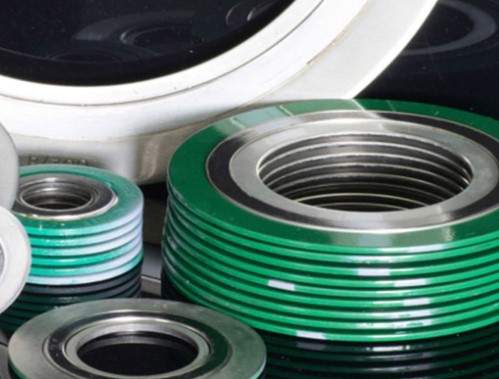
The filler material of a spiral wound gasket, located between the metal winding layers, plays a crucial role in chemical resistance, thermal stability, and sealing effectiveness. Common filler materials include:
- Graphite: Best suited for high-temperature applications such as steam systems, power generation, and refineries. Graphite can withstand extremely high temperatures while maintaining resilience and compressibility. It is also resistant to most industrial gases and liquids.
- PTFE: Commonly used in chemical, pharmaceutical, and food industries. PTFE offers excellent chemical resistance, particularly against acids, alkalis, and aggressive solvents. Its compressibility ensures a tight seal under varying pressures.
- Mica-Graphite Composites: Designed for ultra-high temperatures or oxidizing environments, this hybrid filler combines thermal stability and flexibility, making it ideal for extreme conditions.
In chemical processing applications, PTFE is widely preferred due to its compatibility with acidic and alkaline media, minimizing the risk of filler degradation. Proper filler selection is essential for ensuring long-term reliability and leak-free performance in industrial systems.
The metal winding provides the mechanical backbone of spiral wound gaskets. It determines the gasket's strength, compression resistance, and corrosion performance. Selecting the correct metal material is critical for ensuring reliability in demanding conditions. Common materials include:
- Stainless Steel 304: Offers general corrosion resistance. Suitable for standard industrial and low-corrosive applications.
- Stainless Steel 316: Contains molybdenum, improving resistance to chlorides and marine environments. Ideal for coastal, offshore, or highly humid conditions.
- Nickel Alloys (Inconel, Monel): Recommended for highly corrosive or high-pressure environments. These alloys maintain mechanical and chemical stability in extreme conditions, including acids, alkalis, and saltwater environments.
For coastal or offshore installations, stainless steel 316 is preferred over 304. This choice extends gasket life and reduces maintenance frequency in corrosive atmospheres.
Flange type is a critical factor in gasket selection. The correct gasket ensures alignment, uniform compression, and leak prevention.
- Raised Face (RF) Flanges: The most common flange type in industrial systems. Gaskets with an outer ring are recommended. The outer ring ensures proper alignment and prevents over-compression, reducing blowout risk under high pressure.
- Tongue-and-Groove or Flat Face Flanges: Require gaskets without a center ring, as the flange design itself provides alignment and compression control.
Simple compatibility checks can prevent installation errors. Use gaskets with inner and outer rings for RF flanges and compression-controlled gaskets for flat or tongue-and-groove flanges. Using an incompatible gasket can lead to leaks, flange damage, and system downtime.
Spiral wound gaskets must resist the chemical properties of the system media, including gases, liquids, and steam. Recommended material combinations include:
- Steam Applications: Stainless steel 316 winding with graphite filler
- Hydrocarbon Media: Stainless steel 304 winding with PTFE filler
- Acidic Media: Monel alloy winding with PTFE filler
- Alkaline Media: Inconel alloy winding with graphite filler
Understanding the media’s chemical composition, concentration, temperature, and variability ensures that the gasket remains stable, preventing chemical attack, creep, or leakage.
Industrial gaskets should comply with international standards to guarantee safety and performance. Key standards include:
- ASME B16.20: Defines gasket dimensions, tolerances, and materials.
- IS 2712: Covers material requirements and testing procedures.
- API 601: Specifies performance testing and design requirements.
Work with BIS-certified or ISO 9001-certified manufacturers. Ensure they provide material certificates, test reports, and performance data. This guarantees consistent quality, traceability, and long-term reliability.
The inner and outer rings significantly affect gasket performance:
- Outer Ring: Ensures correct alignment during installation and prevents blowout.
- Inner Ring: Protects the filler material and prevents inward buckling during compression.
For high-pressure steam systems, thermal cycling, or heavy-duty applications, gaskets with both rings provide maximum sealing reliability and operational safety.
Spiral wound gaskets typically come in 3.2 mm, 4.5 mm, and 6.4 mm thicknesses. Thickness affects compression, sealing integrity, and load distribution:
- 3.2 mm: Low-pressure, light-duty applications.
- 4.5 mm: Standard for most industrial raised face flanges; provides consistent sealing.
- 6.4 mm: Suitable for uneven flanges or heavy-duty applications; compensates for surface irregularities.
Avoid overly thick gaskets, as they can cause uneven compression, seal failure, and installation challenges.
Industries such as petrochemical, refining, pharmaceutical, and power generation often require custom spiral wound gaskets to meet specific needs:
Non-standard sizes or shapes
Specialized metal windings
FDA-grade or regulatory-compliant filler materials
Select suppliers that offer design support, in-house testing, and rapid prototyping. Clear communication of operating conditions, performance expectations, and delivery timelines ensures that custom gaskets meet operational and regulatory requirements.
The quality of a gasket largely depends on the manufacturer’s expertise. Evaluate suppliers based on:
Internal testing and quality assurance systems
Industry experience in similar applications
Compliance with global standards and certifications
Fast delivery capability for emergency replacements
Partnering with reliable suppliers reduces risk, ensures consistent performance, and supports long-term operational stability.
Spiral wound gaskets are widely used across industrial sectors:
- Oil & Gas: Companies like ONGC, IOCL, HPCL rely on leak-free seals for pipelines and process equipment.
- Fertilizer Production: Essential in ammonia, urea, and other chemical manufacturing processes.
- Pharmaceutical Manufacturing: High hygiene standards and material purity are critical.
- Power Plants: Thermal and nuclear plants require reliable sealing in high-pressure, high-temperature steam systems.
Understanding common failure modes helps in prevention:
- Blowout: Often due to improper installation or missing inner rings.
- Creep or Relaxation: Caused by incompatible filler materials.
- Leakage: Results from uneven flange surfaces or incorrect bolt torque.
- Corrosion: Occurs if metal winding is incompatible with media.
- Compression failure: From excessively thick or soft gaskets.
Preventive measures include correct material selection, proper installation, and regular inspection.
Avoid these pitfalls:
- Ignoring chemical compatibility
- Overlooking flange surface roughness
- Selecting the wrong pressure rating
- Omitting inner or outer rings when required
- Choosing low cost over durability
These errors can cause premature failure, leaks, and operational downtime, increasing maintenance costs.
Always consult standards such as ASME B16.20 or BIS charts before finalizing material choices.
Verify flange type and ensure gasket design aligns with flange configuration.
Cross-check chemical compatibility with process media, including temperature and pressure variations.
Consider environmental factors, such as coastal or offshore conditions, when selecting metal windings.
Plan for maintenance, ensuring replacement gaskets are readily available for critical systems.
By following these practical tips, operators can maximize gasket life, reduce leakage risk, and ensure consistent system performance.
Selecting the right spiral wound gasket involves evaluating pressure ratings, temperature ranges, flange type, chemical compatibility, operational conditions, and material quality. Correct selection ensures long-term sealing reliability, system safety, and operational efficiency.
Spiral wound gaskets combine mechanical strength with flexible sealing, making them ideal for systems subjected to pressure and temperature fluctuations, corrosive chemicals, and mechanical stress. Following a structured selection process and working with experienced suppliers ensures leak-free operation, minimal maintenance, and long service life.
With proper selection, installation, and maintenance, spiral wound gaskets provide reliable sealing in even the harshest industrial environments, supporting safe, efficient, and continuous operations across multiple sectors.