
In modern industrial operations, sealing technology plays a critical role in ensuring the safety, efficiency, and longevity of equipment. Whether in high-temperature, high-pressure environments or in contact with highly corrosive media, industrial systems require dependable sealing materials to maintain operational integrity. Among the many options available, graphite packing stands out as a high-performance sealing solution, valued for its exceptional properties and broad applicability. This article provides a comprehensive overview of graphite packing, detailing its characteristics, types, applications, installation, maintenance, advantages, challenges, and practical case studies, offering a complete guide for understanding and effectively using this superior sealing material.
Graphite packing is a type of sealing material made from braided graphite fibers reinforced with various other fibers and metal wires, such as steel wire, copper wire, nickel wire, carbon fiber, pre-oxidized fiber, or glass yarn. This combination produces a material that exhibits a unique blend of flexibility, durability, and thermal resilience. Key characteristics of graphite packing include:
- High Temperature and High Pressure Resistance: Graphite packing maintains stable sealing performance under extreme temperature and pressure conditions. This capability makes it ideal for applications in industries such as petroleum, chemical processing, power generation, and steel production. It can reliably seal media such as hot water, superheated steam, and heat transfer fluids, ensuring equipment safety in demanding operating conditions.
- Strong Corrosion Resistance: Except for a few strong oxidizing agents, graphite packing exhibits excellent chemical resistance. It can withstand corrosive media, including ammonia solutions, hydrocarbons, and low-temperature liquids. Its robust resistance to chemical attack makes it a preferred sealing solution for valves, pumps, and reactors, ensuring safe and reliable operations in aggressive chemical environments.
- Good Self-Lubrication and Thermal Conductivity: Graphite packing naturally provides low friction due to its self-lubricating properties, reducing wear on rotating shafts and other components. Additionally, its excellent thermal conductivity allows heat to dissipate efficiently, preventing overheating and potential damage to equipment. These qualities make graphite packing suitable even for high-speed or high-temperature machinery.
- Balanced Softness and Strength: Graphite packing is soft enough to conform to complex installation environments while maintaining sufficient strength to provide mechanical support. It protects shafts, reduces vibrations, and minimizes wear, ultimately extending the service life of the equipment.
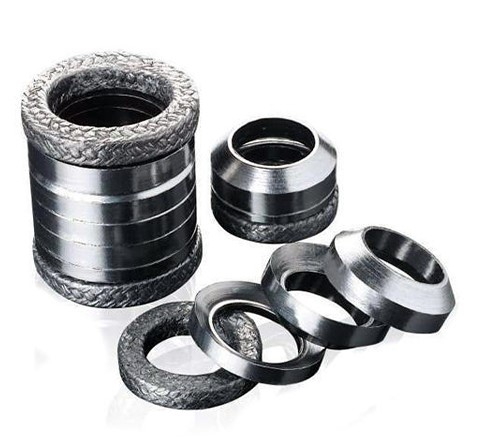
Graphite packing comes in several varieties, each designed for specific applications and operating conditions.
- Expanded Graphite Packing: Also known as flexible graphite packing, expanded graphite packing is made from soft graphite fibers woven into a continuous braid. This type of packing features excellent self-lubrication, high thermal conductivity, low friction, broad compatibility, flexibility, and high strength. These characteristics make expanded graphite packing highly versatile, suitable for a wide range of industrial sealing applications, from pumps and valves to high-temperature pipelines.
- Reinforced Graphite Packing: Reinforced graphite packing builds upon the properties of expanded graphite packing by incorporating additional materials such as glass fibers, copper wire, stainless steel wire, nickel wire, or Inconel wires. This reinforcement enhances strength, durability, and adaptability while preserving the inherent properties of expanded graphite. Reinforced graphite packing is especially effective for high-temperature, high-pressure sealing applications where conventional braided packing alone may be insufficient.
- High Performance: Graphite packing exhibits excellent high-temperature, high-pressure, corrosion-resistant, and self-lubricating properties. It maintains stable sealing under extreme conditions, ensuring reliable equipment operation.
- Versatility: Expanded and reinforced graphite packing are compatible with a wide range of media and equipment, making them suitable for various industrial applications.
- Long Service Life: Graphite packing has a long operational life, reducing maintenance frequency and associated costs. This longevity contributes to overall process efficiency and reliability.
- Ease of Installation: When installed correctly, graphite packing delivers effective sealing with minimal complexity. Proper installation ensures consistent performance and reduces the likelihood of operational issues.
- Installation Precision Required: Incorrect installation can compromise sealing performance. Attention to detail, cleanliness, and adherence to proper procedures are essential to avoid leaks.
- Relatively High Cost: High-quality graphite packing can be expensive, increasing upfront equipment costs. However, its long-term durability and performance often justify the investment.
- Special Media Considerations: While graphite packing resists many chemicals, strong oxidizing agents may affect its performance. Careful material selection is necessary to match specific media conditions.
Graphite packing finds extensive use across multiple industrial sectors, particularly in sealing high-temperature, high-pressure, and corrosive media.
- Petroleum Industry: During petroleum extraction and refining, graphite packing is used to seal pipelines and equipment carrying high-temperature, high-pressure crude oil or petroleum products. Its ability to prevent leaks ensures environmental protection, operational safety, and improved production efficiency. By minimizing oil leakage, graphite packing helps reduce environmental pollution and supports continuous, stable operations.
- Chemical Industry: Chemical processes often involve highly corrosive substances, which require durable sealing solutions. Graphite packing resists a wide range of chemical media, making it ideal for sealing pumps, valves, reactors, and storage equipment. It performs exceptionally well with media such as ammonia solutions, hydrocarbons, acids, and alkalis, protecting equipment from corrosion and maintaining process integrity.
- Power Plants: Boilers, steam turbines, and other power generation equipment operate under extremely high temperatures and pressures. Graphite packing is used to seal superheated steam, hot water, and other heat transfer media, ensuring the normal operation of critical equipment. Its application in power plants enhances efficiency, reduces maintenance requirements, and prevents costly equipment downtime.
- Steel Industry: Steel manufacturing facilities require robust sealing solutions for high-temperature furnaces, rolling mills, and other equipment. Graphite packing withstands extreme heat and pressure while providing consistent sealing performance, safeguarding machinery and extending service life. Its thermal conductivity also helps dissipate heat, contributing to equipment longevity and operational safety.
Proper installation and maintenance are critical to achieving optimal sealing performance with graphite packing. The following guidelines outline key steps and considerations.
- Remove Old Packing: Before installing new graphite packing, remove all traces of the old material. Clean the stuffing box thoroughly and inspect the shaft or valve stem for any wear or damage. Replace any damaged components to ensure proper sealing performance.
- Select Appropriate Packing: Choose graphite packing that matches the equipment's operating conditions, including temperature, pressure, and the chemical properties of the media. Ensure that the packing's dimensions and performance specifications align with the equipment requirements.
- Install Packing Rings: Install the packing rings sequentially in the stuffing box. Offset the cut ends of adjacent rings by 90 degrees to ensure an effective seal. During installation, apply a clean lubricant to the shaft or valve stem to facilitate smooth operation and prevent premature wear.
- Tighten the Gland Bolts: After placing the packing, use the gland follower to compress the rings. Tighten the gland bolts evenly with a wrench or torque measuring device. Uniform compression is essential to avoid leaks and ensure the packing functions correctly.
- Commission Equipment: Run the equipment under no-load conditions first, observing for any leaks or abnormal operation. Gradually increase to full operational load while monitoring leakage. Minor gland adjustments may be required to maintain a controlled leakage rate within acceptable limits.
- Regular Inspection: Periodically check the packing's condition during operation. If leakage increases or the packing shows significant wear, adjust or replace it promptly to prevent equipment damage.
- Lubrication and Cooling: Ensure that lubrication and cooling systems are functioning correctly for equipment requiring these supports. Proper lubrication reduces friction and wear, while adequate cooling prolongs packing life and enhances sealing performance.
- Failure Analysis: In the event of premature packing failure, conduct a thorough analysis to identify the root cause. Addressing the underlying issue can prevent recurrence, improving overall equipment reliability and efficiency.
- Petroleum Industry: At a petroleum refinery, graphite packing was installed in pipelines carrying high-temperature, high-pressure oil products. By strictly following installation procedures, the packing achieved excellent sealing performance. Over time, it effectively prevented oil leaks, minimized environmental contamination, and enhanced production efficiency. Its long service life also reduced maintenance frequency and overall operational costs.
- Chemical Industry: A chemical manufacturing facility handling corrosive media adopted reinforced graphite packing in its equipment. During operation, the packing demonstrated outstanding resistance to chemical attack, maintaining safe and stable sealing performance. Through regular inspection and maintenance, the packing's longevity was maximized, ensuring continuous process safety and efficiency.
Graphite packing, as a high-performance sealing material, offers a combination of high-temperature, high-pressure, corrosion-resistant, and self-lubricating properties, making it widely applicable across multiple industrial sectors. From petroleum and chemical industries to power generation and steel production, graphite packing provides a reliable sealing solution that enhances equipment safety, efficiency, and lifespan.
Although installation demands careful attention and initial costs may be relatively high, the benefits of long-term durability and excellent performance result in significant economic advantages. Selecting the appropriate graphite packing based on equipment conditions and media properties ensures optimal sealing performance.
In summary, graphite packing remains an indispensable material in industrial sealing. It not only safeguards equipment operation but also contributes to improved production efficiency and environmental protection. As industrial technology advances, the applications for graphite packing are expected to expand further, offering even more reliable sealing solutions for modern industrial systems.
